Chengkan Village in Huangshan: Practical Info & Highlights
Chengkan Village in Huangshan is known as the "No. 1 Fengshui Village in China." It maintains a low degree of commercialization, featuring a distinctive group of Hui-style buildings established by the Luo family after their relocation. The ancient residences are beautifully preserved, characterized by high horse-head walls and detailed carvings found everywhere. If you are interested in Chinese architecture, Chengkan Village is definitely worth exploring. Also, it's a good choice to add it into your Huangshan tour.
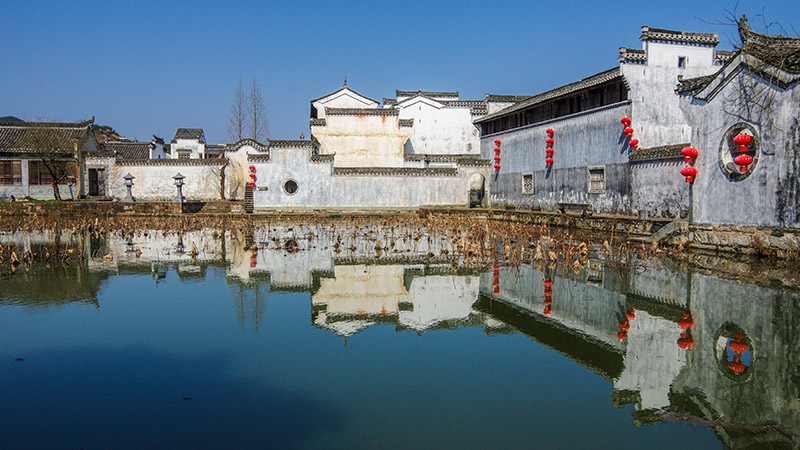 View of Chengkan Village by the river
Facts About Chengkan Village in Huangshan
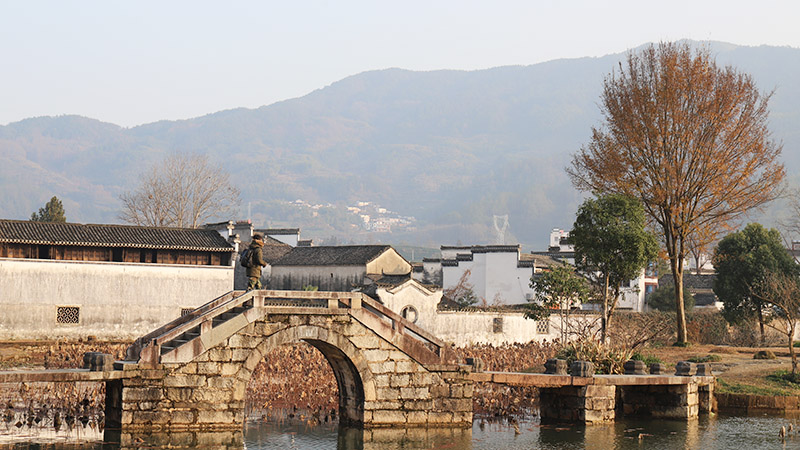 Chengkan village in winter
Chengkan Village, often called the "Bagua Village of China," has a history spanning over 1,800 years. It's famous for its traditional Bagua (Eight Trigrams) layout, a design based on Feng Shui believed to bring good fortune and harmony. At the village entrance, the Ping'an Kan (Peaceful Step) offers a symbolic meaning: "Kan" can mean "step" as well as "difficulty," implying that overcoming this threshold brings peace and success. In this village, you'll find exquisite wood carvings in the old houses, and the characteristic horse-head walls are also well-preserved.
- Location: Chengkan Town, Huizhou District, Huangshan City, Anhui Province
- Opening Time: All Day
- Recommended Duration: 2 to 3 Hours
- Tickets: The full ticket price is 107 RMB (15 USD). It's valid for 3 days if you stay overnight in Chengkan Village; otherwise, it's valid for 1 day.

Best Time to Visit Chengkan Village
If you ask when the best time to visit Chengkan Village is, I would say it's autumn (September to November). During this period, temperatures are mild, typically between 15℃ and 25℃. This is the harvest season when locals spread out pumpkins, corn, and chili peppers to dry in the lanes and courtyards.
Beyond autumn, Chengkan is lovely in other seasons:
- Spring (March to May) is mild and pleasant, with lush trees and flowers, making it ideal for hiking.
- Summer (June to August) is hot and humid, yet its cooling streams are refreshing, and the lotus flowers are in bloom.
-
Winter (December to February) is quiet, with occasional snowfalls. It has fewer crowds, and accommodation tends to be less expensive.
Recommended Tour Itinerary
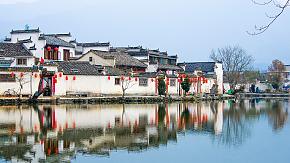
What to See & Do in Chengkan Village
1. Explore the Special Bagua Layout
 Chengkan Village in Huangshan
Chengkan Village's layout is based on the distinctive Bagua (Eight Trigrams) design, featuring a carefully ordered network of intersecting alleys. The Bagua comes from the Taoist view of the cosmos, representing the eight directions and facets of the universe. This design is both symbolic and practical: it helps organize houses and roads, manages the water system, and ensures the village is in balance with nature.
A special sight is the Gate of Bagua, where eight gates are arranged neatly in a row. This is the main route you must take to access the attractions further within the village. As you wander through the village, you can admire the exquisite beauty of the old houses and appreciate the thoughtful layout created by ancient Chinese wisdom.
2. Visit Ancient Architecture
 Ancestral Temple in Chengkan Village
In Chengkan Village, you are surrounded by Hui-style architecture: white walls, black tiles, high horse-head walls, and fine carvings on the main structures. The essential stop is the Luo Dongshu Ancestral Hall, the Luo family's ancestral temple. The building is grand and solemn, and the Baolun Pavilion inside is particularly spectacular, with beautifully carved wooden structures that have stood for hundreds of years.
The Changchun Temple is a local temple where people honor the Earth God and the God of Five Grains, becoming especially lively during its main festival days in the first and ninth lunar months.
3. Try Some Delicious Food
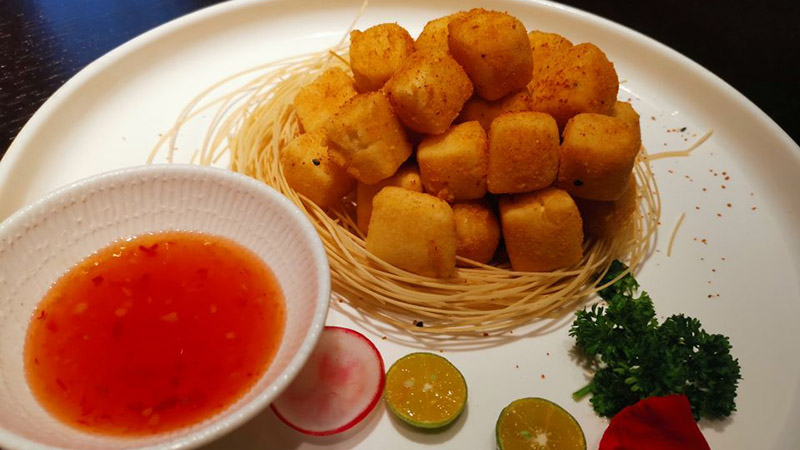 Local Huangshan food - Mao Doufu
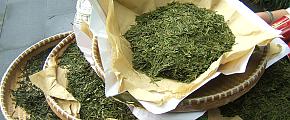
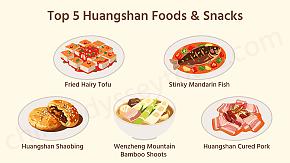
When you visit Chengkan, besides admiring the ancient architecture, don't forget to taste the local food. Hui cuisine is known for emphasizing proper heat control and original flavors. The most iconic dishes include Stinky Mandarin Fish (Chou Gui Yu), Hairy Tofu (Mao Doufu), and Braised Pork with Dried Bamboo Shoots. Local cured meats, such as Daobanxiang, are another regional flavor worth trying. Before you leave, be sure to take some local specialties home, like Huimo Su (a sesame dessert shaped like an inkstick) and the golden, crispy Shao Bing (flatbread). Tea is a great takeaway gift too, especially the famous Huangshan Maofeng.
4. Watch the Fish Lantern Parade
There is a special event in Chengkan Village, that is, the Fish Lantern Parade, which is held almost every evening. The performance usually starts in the early evening when the colorful fish lanterns are lit in the Shaiqiu Square. The procession then begins, moving slowly around the square and along Yongxing Lake. You can watch from the side, and sometimes, you even have the chance to join the group and hold a lantern. Under the night sky, the lantern light reflects on the water and the alleys, occasionally dotted with fireworks, reaching a spectacular peak, ensuring your visit is truly worthwhile.
Travel Tips
- Please note that the Fish Lantern Parade will not be held if it rains. Please check the weather forecast in advance.
- The start time may be adjusted according to the actual situation and generally takes place between 5:30 PM and 7:00 PM.
- Since the performance takes place at Yongxing Lake, access requires buying the full ticket. The Ancient Village-only ticket will not grant you entry to the viewing area.
How to Get to Chengkan Village
You can get to Chengkan Village by bus or by car. If taking the bus, board Bus No. 17 and get off at Chengkan Station, then walk for roughly 4 minutes (about 377 meters). If you’d like a more relaxed experience, China Odyssey Tours can arrange a private car, local guide, and experienced driver to accompany you, making your visit completely hassle-free.
Nearby Highlights
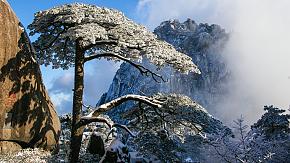
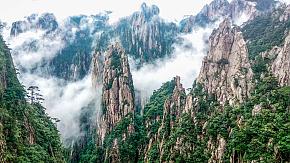
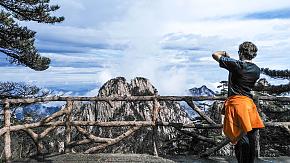
Huangshan Scenic Area (Yellow Mountain)
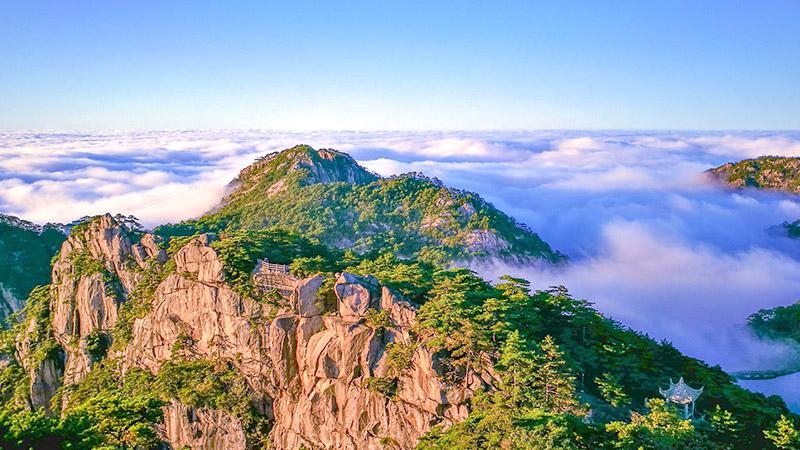 Huangshan Mountain surrounded by clouds
Just 27 km from Chengkan Village (about 30 minutes by car). Huangshan offers gorgeous seasonal landscapes and a remarkably rich ecosystem. It is ideal for spotting diverse wildlife (like monkeys and egrets) and travelers who love nature photography.

Qiankou Residence Museum
An open-air gallery of Hui-style architecture, where you can see a concentrated collection of Ming Dynasty residences, ancestral halls, and memorial arches that have been relocated and reassembled from various places. It is about 6 km from Chengkan Village, roughly a 12-minute drive.
Tangmo Ancient Village
Located about 12 km from Chengkan Village, approximately a 20-minute drive. It is renowned for its Shuikou gardens and Hui-style architecture, where you can enjoy sights like the Tangan Stream, ancient memorial arches, and a water street.
Plan Your Chengkan Village Trip with Us Now
A visit to Chengkan Ancient Village promises a memorable experience, showing you its distinctive Eight Trigrams design, beautiful old houses, and local culture. It will undoubtedly be a key highlight of your trip to Huangshan. Please visit our contact page or send an email to trip@odynovotours.com to start planning your Huangshan trip now.
Related Posts You May Like