Your Complete Guide to Yonghe Temple (Lama Temple)
Yonghe Temple, or Lama Temple as it’s locally known, is one of Beijing's most fascinating and historically-relevant places. The Temple offers a unique blend of Tibetan Buddhism and Chinese imperial culture, which makes it stand out among Beijing’s many historical sites.
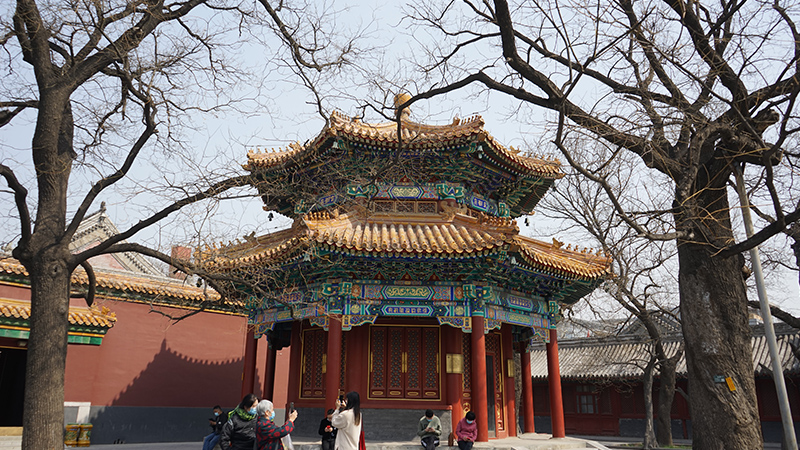 A Beautiful pavilion in Lama Temple
The History of Yonghe Temple
The Yonghe Temple has a long and fascinating history, starting in 1694. Initially, what we now know as the Lama Temple was a place where Qing Dynasty court eunuchs lived. It then became a place for Prince Yong to hold court until he died in 1735. After that, the temple went through another transformation, turning into a full monastery in 1744, and today, it is one of the best examples of a lamasery, or Tibetan Buddhist monk monastery, in the world.
Since this destination has such deep cultural ties and layers of history, it’s good to have context before visiting. We can help you design your Beijing trip, which includes Yonghe Temple, and provide you with all the information you need to appreciate the place fully.
The Yonghe Temple's Architecture
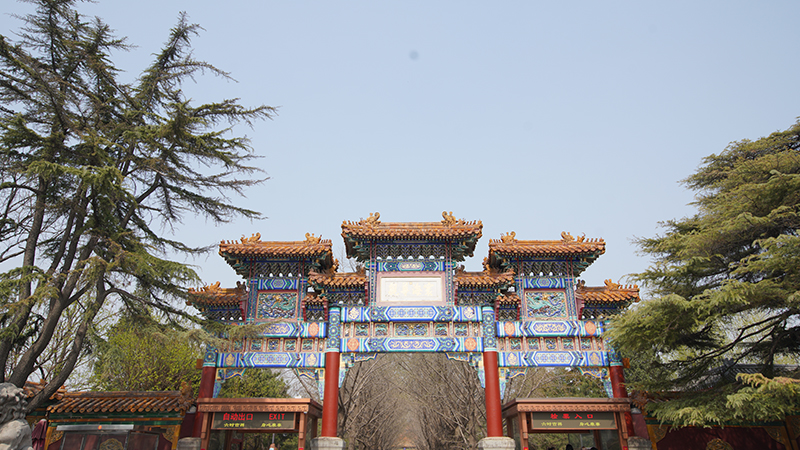 The gate of Lama Temple
Spanning 66,400 square meters, the Lama Temple contains five essential structures, several courtyards, and an impressive main gate located in the southern part of the site. It’s also full of some of the best-preserved and unique Buddhas in the world, including several bronze Buddhas representing the future, past, and present and a massive 26-meter sandalwood Buddha.
Other elements, like the temple’s signature yellow tiles, reflect its importance to the Qing Dynasty. You can also see references to Yonghe Temple’s imperial status near the southern gate, adorned with crimson walls and lions, and find relics from Qing, Yuan, and Ming Dynasties throughout the complex.
Important Buildings of Lama Temple
While everything in this monastery complex is well worth seeing and exploring, some structures stand out for their historical, cultural, or spiritual relevance. Additionally, each building has a unique spiritual significance, and understanding the background of these impressive structures is important to fully appreciate Lama Temple.
The Yonghe Gate
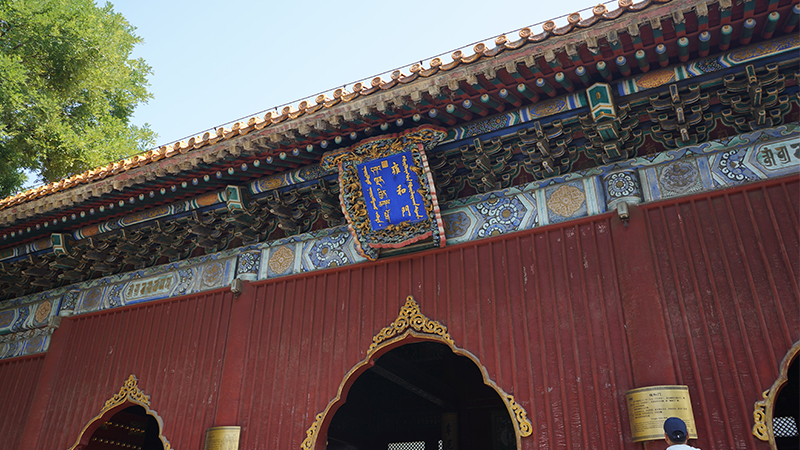 The Yonghe Gate
The Yonghe Gong Main Hall
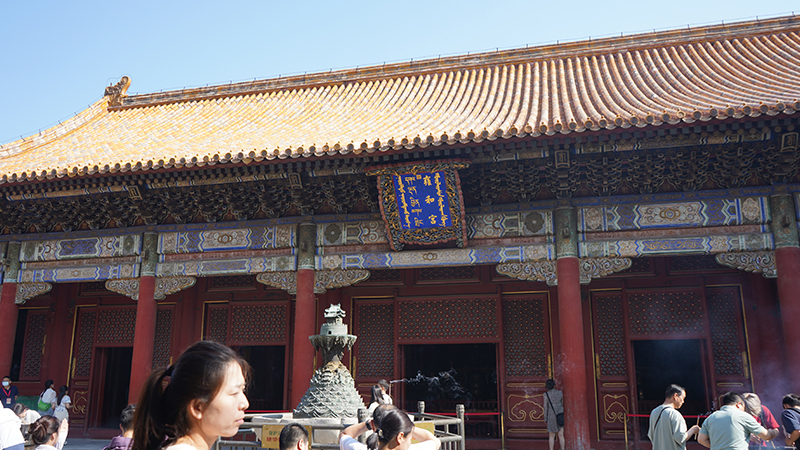 The Yonghe Gong Main Hall
Visitors seeking prosperity and financial success will want to spend some time in Yonghe Gong Main Hall, also known as Yonghe Palace, as this place is closely spiritually linked with both. You will find bronze Buddhas representing the past, present, and future in this hall. Each one measures two meters high and is set against a backdrop of the 18 Arhats and a mural representing the Chinese Goddess of Mercy. While this space is visually stunning, it becomes even more meaningful when you understand the history behind the Arhats, murals, and Buddhas.
The Yongyou Hall
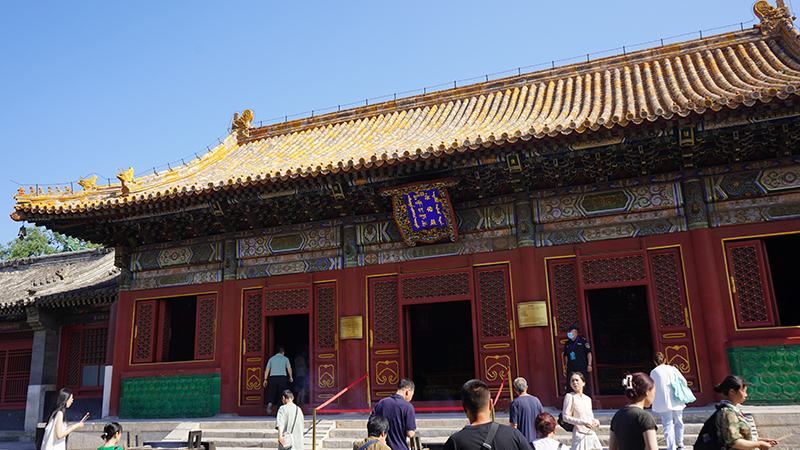 The Yongyou Hall
Dating back to the time of Prince Yong, Yongyou Hall is five conjoined buildings that served as his royal residence before the temple was fully converted into a monastery. While you’ll find several relics inside, one of the most important pieces is the Bhaisajya Guru, a protective and healing Buddha with special significance in Chinese culture. The Yongyou Hall is affiliated with keeping evil away, and also preventing disasters, so the Bhaisajya Guru is especially appropriate.
The Falun Hall
From an architectural and cultural perspective, one of the most interesting places in Yonghe Temple is Falun Hall, where you can see a combination of Han and Tibetan styles. The room is dominated by two items: a vast bronze lotus and a red sandalwood Arhat Hill carving with tin, gold, copper, iron, and silver statues. In addition to being peaceful and lovely, it’s spiritually linked with seeking and manifesting career success.
Wanfu Pavilion
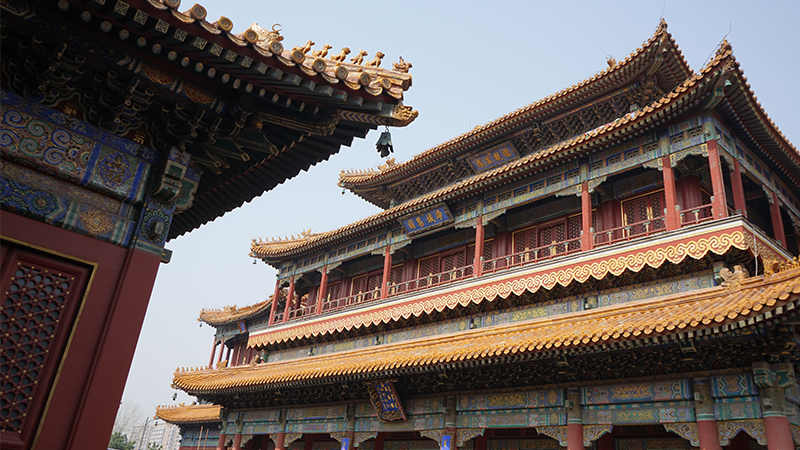 Wanfu Pavilion
The Wanfu Pavilion goes by several names, including All Blessings Pavilion and The Hall of Boundless Happiness. The ideas of abundance and fortune align perfectly with the Wanfu Pavilion’s spiritual meaning, which is linked to good luck, children, and love. You’ll find the largest wooden Buddha on the planet in this temple, measuring a total of 26 meters high, white sandalwood Buddha Maitreya. Not only is this Buddha aesthetically pleasing, but it also has deep religious and historical significance, as it was carved out of a piece of sandalwood presented to the Qian Dynasty by the Dalai Lama.
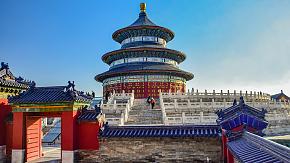
Travel Tips for Lama Temple
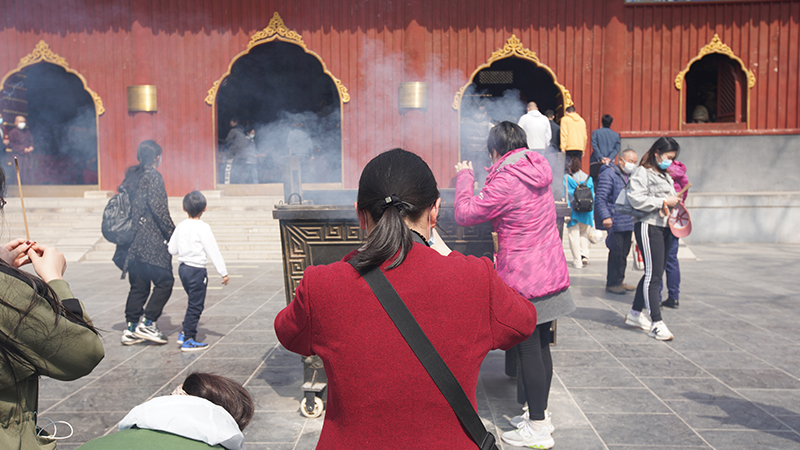 People pray for themselves at Lama Temple
Visitors can fully experience the Yonghe Temple complex in about one-and-a-half hours, and you can visit at any time of year, although weekends and Chinese holidays tend to be busier. Religiously significant times of year and holidays will likely draw large crowds, as the Lama Temple is a popular place to get blessings. Guests should also bring water and snacks, because there are no dining facilities in the monastery complex, and although there isn’t a strict dress code, modesty is appreciated, especially in the more sacred spaces.
On the east side of Yonghe Gate Hall, guests can find the Visitor Service Center, which offers tour guide services in three languages: Chinese, English and German. The Visitor Service Center is also an excellent place to seek first aid help, umbrellas, and wheelchairs if you need them.

How to Get to Yonghe Temple
Yonghe Temple is easily accessible from most of Beijing, and the best way to get there is by taking the Line 5 or Line 2 subway to the Yonghegong Lama Temple metro station. You can also travel there by bus, with several buses stopping right outside or very close to the temple itself. You can also take a taxi, as Lama Temple is a very popular tourist destination, and all taxi drivers will know where to take you.
Yonghe Temple is open between 9 a.m. to 4:30 p.m. between April and October and 9 a.m. to 4 p.m. between November and March, and tickets are generally 25 CNY per person. As there is a maximum number of guests who can visit per day, it’s a good idea to arrive early in the morning to ensure that you get your place, or you can buy your tickets online up to ten days before you plan to visit. We can help you plan your itinerary and ensure you have ample time to explore the temple during your visit to Beijing.
The Yonghe Temple is a historical and cultural treasure and should be prominent on your “must-visit” list next time you’re in Beijing. Let us help you plan your trip to the temple and give you all the information you need to fully appreciate and understand its importance.