Ultimate Travel Guide to Hexi Corridor in Gansu
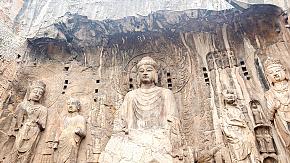
If you are interested in China's ancient Silk Road, the Hexi Corridor is on the top of your travel list. The Hexi Corridor is one of China's most legendary travel routes, linking the heart of the Silk Road with vast deserts, colorful mountains, and ancient frontier towns. Stretching from Lanzhou to Dunhuang through cities like Wuwei, Zhangye, and Jiayuguan, this historic passage is home to breathtaking landscapes and world-famous cultural sites such as Mogao Caves and Zhangye Danxia.
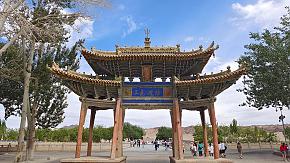
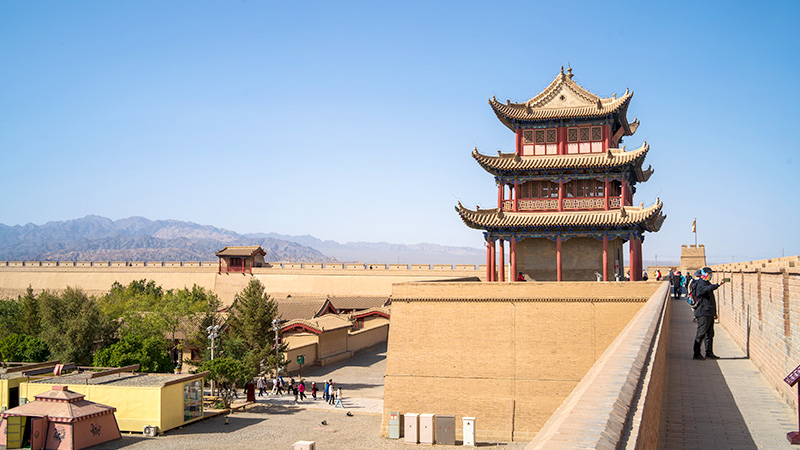 Jiayuguan Pass in Gansu Province
What's the Hexi Corridor?
The Hexi Corridor is a narrow stretch of fertile land in Gansu Province, running westward from Lanzhou to Dunhuang along the northern edge of the Tibetan Plateau. It served as a crucial segment of the ancient Silk Road, connecting central China with Central Asia.
By visiting the cities on the Hexi Corridor, you can explore Buddhist grottoes, ancient tombs, and Silk Road relics, as well as experience desert landscapes and oasis towns that shaped trade, religion, and culture for centuries.
Top 5 Places to Visit on the Hexi Corridor
1. Dunhuang: Where Desert Meets Devotion
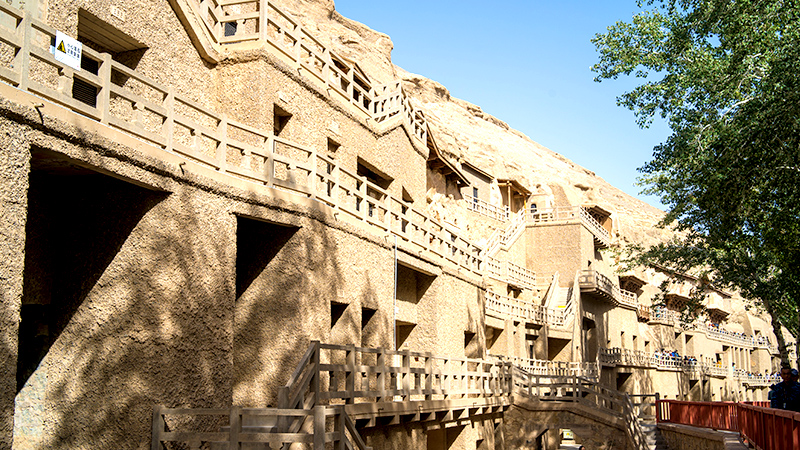 There are many grottoes at Mogao Caves
- Highlights: Mogao Cave, Mingsha Mountain, Crescent Lake, etc.
- Suggested Time: 2-3 days
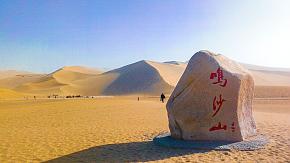
Dunhuang is a key stop on the ancient Silk Road, best known for its cultural sites and desert experiences. At the Mogao Caves, you can explore centuries-old Buddhist murals and sculptures through guided cave visits and a digital exhibition that explains their history and preservation. Just outside the city, Mingsha Mountain and Crescent Lake offer hands-on activities such as camel rides across the dunes, sandboarding, and walking up the ridges to overlook the oasis-shaped lake below. Together, these attractions make Dunhuang a destination where history, religion, and desert exploration come together in a single trip.
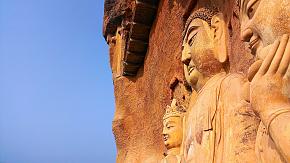
2. Lanzhou: Where the Yellow River Meets the Sky
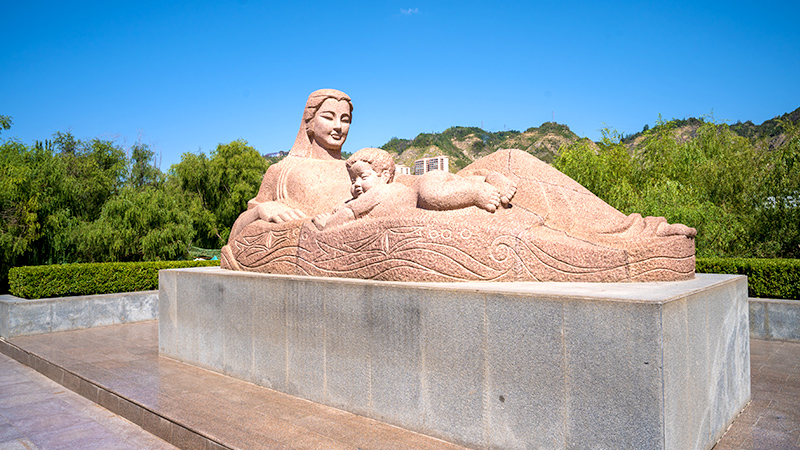 Yellow River Mother Sculpture in Lanzhou
- Highlights: Bingling Temple, Yellow River Mother Sculpture, Gansu Provincial Museum, etc.
- Suggested Time: 1-2 days
Lanzhou is the capital of Gansu and a practical base for exploring both history and modern local life. In the city, the Yellow River Mother Sculpture is a popular stop along the riverside promenade. You can walk across Zhongshan Bridge and walk along the river to see the sculpture. For a deeper context, the Gansu Provincial Museum is a good place to understand the history of the Silk Road in China, featuring artifacts, ancient pottery, and the famous bronze Galloping Horse.
Also, you can plan a day trip to Bingling Temple to take a boat along the Yellow River to reach cliffside Buddhist caves filled with stone carvings from ancient dynasties.
3. Zhangye: A Canvas of Colors and Culture
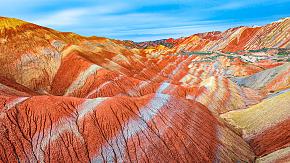
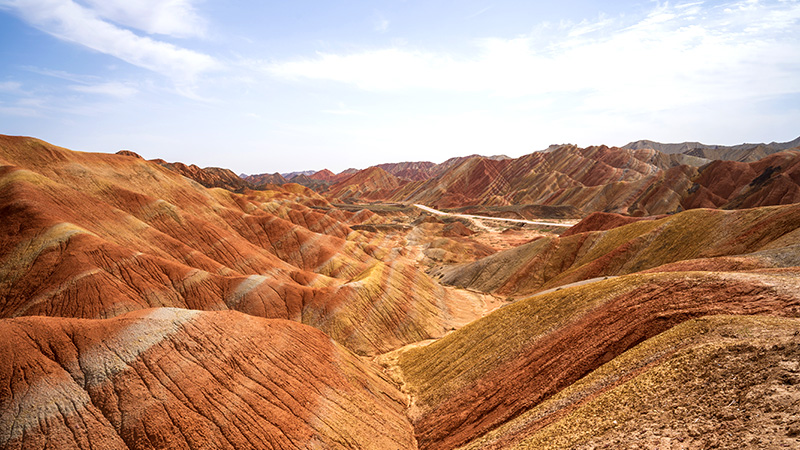 Rainbow mountains in Zhangye Geopark
- Highlights: Zhangye Danxia Geopark, Mati Temple Grottoes, etc.
- Suggested Time: 2-3 days
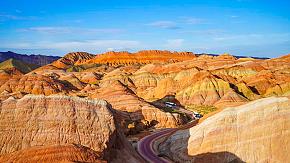
Zhangye is best known for outdoor exploration and historic cave sites linked to the Silk Road. At Zhangye Danxia Geopark, you can see endless rainbow mountains and stop at designated viewpoints for photography. At the Mati Temple Grottoes, you can explore Buddhist caves and narrow stairways built directly into the cliff, walking through halls carved at different heights.
4. Jiayuguan: The Great Wall's Western Sentinel
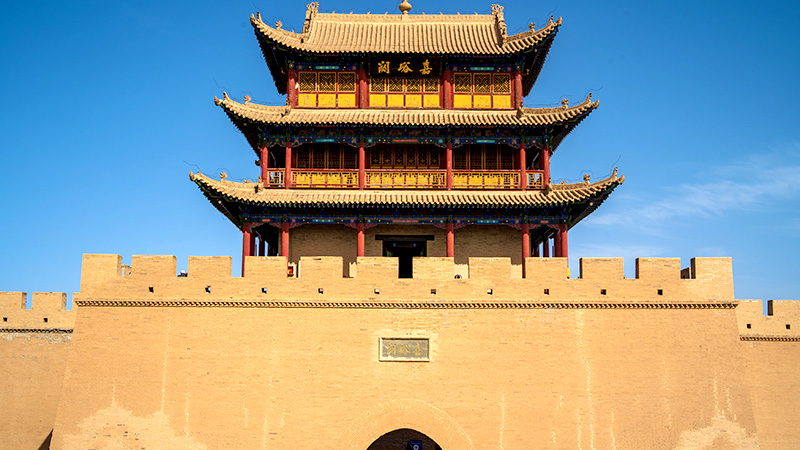 Gate of Jiayuguan Pass
- Highlights: Jiayuguan Pass, Overhanging Great Wall, etc.
- Suggested Time: 1 day
Traveling westward, the landscape opened into wide desert plains leading to Jiayuguan, the westernmost fortress of the Great Wall of China. At Jiayuguan Pass, you can walk along the restored fortress walls, explore the gate towers, and learn about its role as the western end of the Ming Great Wall. If you love adventure, you can hike narrow sections clinging to the cliff and experience the engineering feat up close at the overhanging Great Wall.
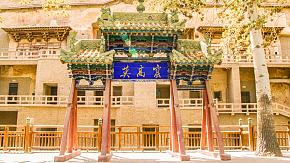
5. Wuwei: Echoes of the Han Dynasty
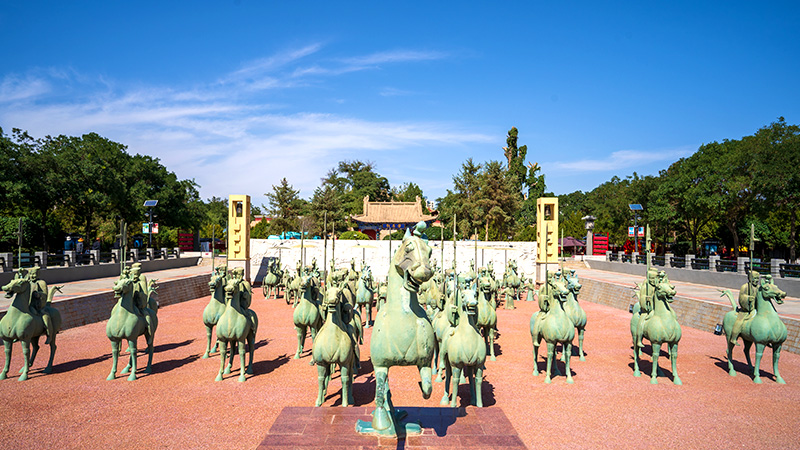 Leitai Han Tomb in Wuwei
- Highlights: Leitai Han Tomb, Tiantishan Grottoes, etc.
- Suggested Time: 1 day
Wuwei is another important Silk Road city that offers a mix of history and archaeology. At the Leitai Han Tomb, you can explore the ancient burial site and see well-preserved murals and artifacts from the Western Han Dynasty. Nearby, the Tiantishan Grottoes feature cliffside Buddhist carvings and statues that you can view up close while walking along the pathways.
Best Time to Visit Gansu's Hexi Corridor
The best time to visit the Hexi Corridor is from April to October, when the weather is dry, sunny, and comfortable for sightseeing across cities like Lanzhou, Wuwei, Zhangye, Jiayuguan, and Dunhuang.
Spring (April-May) brings mild temperatures and blooming landscapes, while summer (June-August) offers long daylight hours and clear skies, making it ideal for exploring desert scenery and cultural sites. Autumn (September-early October) is considered the best season thanks to cool temperatures, golden fields, and excellent visibility for photography. Winter is cold and windy, but you can also enjoy the rare sight of snow-covered deserts. Meanwhile, winter is the lowest season for tourism. If you are traveling on a budget, you can benefit from half-price attraction tickets and much cheaper accommodation. For example, a four-star hotel that normally costs around 700 RMB per night may drop to about 400 RMB in winter.
What to Eat in Gansu?
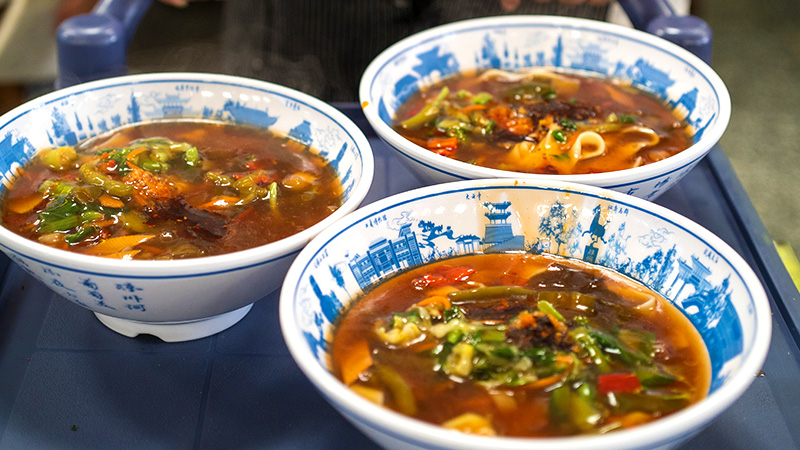 Three servings of beef noodles in Gansu
Gansu cuisine tends to be savory, sour, spicy, and aromatic. Its staple foods are mainly noodles and lamb or beef, shaped by a rich blend of Han, Hui, Tibetan, and Uyghur culinary traditions, resulting in bold and flavorful dishes.
Here are some of the most recommended dishes to try in Gansu:
- Lanzhou Beef Noodles: One of the most famous noodle dishes in Gansu. A bowl comes with sliced beef, and you can customize it with chili oil, vinegar, radish, and other toppings to suit your taste.
- Niang Pi (Cold Wheat Noodles): This dish is especially popular in summer. The wheat sheets are cut into strips and mixed with chili oil, vinegar, garlic, and other seasonings, creating a refreshing and tangy flavor.
- Grilled Lamb Skewers: Commonly found at night markets. If you don't eat pork, this is a great option. These Hui-style skewers are halal, as the Hui ethnic people are Muslim.
- Saozi Noodles: A local specialty of Zhangye. It's a bowl of sour and spicy noodle soup with a rich mix of diced meat, tofu, and vegetables.
How to Get to the Hexi Corridor
Generally, Lanzhou is the first stop in the Hexi Corridor. After arriving in Lanzhou, we suggest you take bullet trains to other places in the Hexi Corridor, like Dunhuang, Zhangye, etc.
Travel to Lanzhou By Air
Lanzhou has an airport with flights connecting most major domestic cities. You can fly to Lanzhou from Beijing, Shanghai, Xi'an, Chengdu, and more. Although there are no direct international flights to Lanzhou, you can first fly to a major Chinese city and then transfer to a flight to Lanzhou.
Travel to Lanzhou By Train
Lanzhou is a key hub on the long-distance rail network, including high-speed trains from Xi'an, Xining, Chengdu, and Urumqi. In many cases, taking a train is more convenient because Lanzhou Railway Station and Lanzhou West Station are close to downtown.
How Long to Spend in Hexi Corridor
To cover the key highlights of the Hexi Corridor, 7-8 days is usually sufficient. You can explore iconic destinations like Dunhuang, Zhangye, and Lanzhou, a perfect mix of Silk Road history, desert landscapes, and cultural heritage.
For a deeper, more immersive journey, we recommend 13 days or more. This allows you to include remarkable stops such as Jiayuguan and Wuwei. While enjoying a more relaxed pace and richer local experiences. We can tailor the itinerary to match your interests, travel pace, and schedule.
Travel Tips
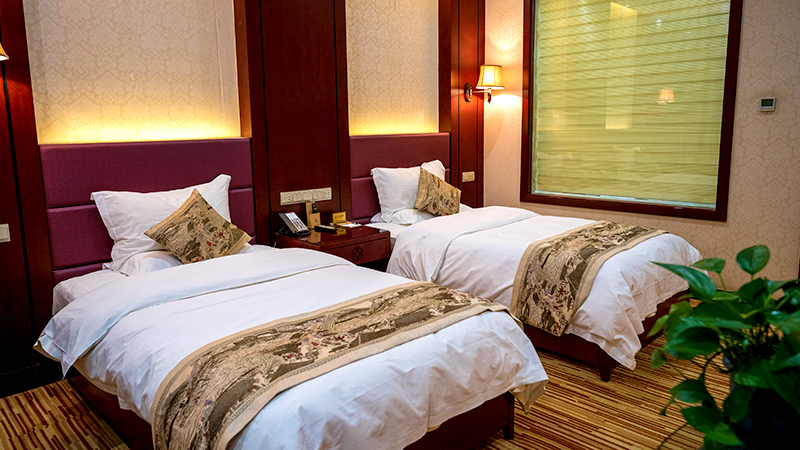 A hotel room with twin beds in Zhangye
- Prepare for big temperature differences. Daytime can be warm while mornings and evenings are cool. Pack layered clothing, sun protection, and a light jacket even in summer.
- Protect yourself from sun and wind. The region is dry and sunny year-round. Bring sunscreen, sunglasses, lip balm, and a scarf or mask to protect against strong sunlight and desert winds.
- Respect cultural heritage. When visiting grottoes, temples, and historical sites, follow rules about photography and behavior to help preserve these fragile relics.
- Create a customized itinerary with us. To make the most of your journey, we can design a tailor-made Hexi Corridor itinerary based on your travel pace, interests, and budget, including hotels, transportation, and guided visits. Contact us or write to trip@odynovotours.com to get your quote for free.
Related Posts You May Like