How to Take a Train in China (First-Time Guide)
For many travelers, trains are one of the most comfortable and efficient ways to explore China. However, if it's your first time visiting, things like booking tickets, going through security, and finding your way around large railway stations may feel a bit overwhelming.
This guide walks you through the entire process step by step, so you can travel more confidently. If you prefer a hassle-free option, you can also choose a private customized tour with us, where all the details are arranged for you in advance.
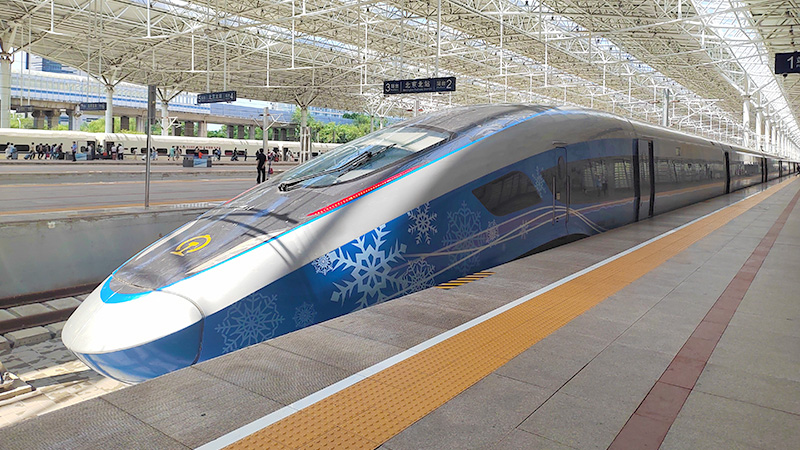 High-speed train stop at the station
How to Buy Train Tickets
Option 1: Let Us Buy Tickets for You
If you travel with us, train tickets and transportation planning are fully handled by our team. You only need to provide a passport copy or photo. Based on your itinerary, we will select suitable trains and complete the booking in advance.
Beyond ticketing, we also coordinate transfers, hotel check-ins, and onward transportation. Even if there are schedule changes or ticket availability issues, we will handle everything for you to ensure a smooth journey.
Option 2: Book Tickets Online Yourself
You can book through the official site (12306), which supports passport registration and has an English version, or platforms like Trip.com and Klook.
One thing to know: tickets on popular routes can sell out quickly. At the same time, seats may reappear later due to cancellations. If your schedule is fixed, you may need to check availability more than once.
Option 3: Buy Your Ticket at the Station
You can also purchase tickets at the station ticket counter using your passport. However, during peak travel seasons or on popular routes, your preferred trains may already be sold out. In addition, English service levels vary between stations, so communication and the booking process may take more time.

Do You Need a Paper Ticket?
No, you don't. Just bring your passport and go through the manual lane at the station. Your passport works as your ticket.
If you're traveling with us, we'll also send you a copy of your ticket and go over the details with you before departure.
What to Check on Your Ticket
Before you go, take a quick look at:
- Name & passport number: Make sure the information matches your passport exactly.
- Station names: Large cities often have multiple railway stations, usually named by direction (dong, nan, xi, and bei). For example, Beijingxi refers to Beijing West Railway Station, and Xi'anbei refers to Xi'an North Railway Station. Make sure you go to the correct station before departure.
- Departure time: Only the departure time is shown on the ticket, not the arrival time. You can check the arrival time on your booking platform.
- Train number: After entering the station, you can use the train number to find your corresponding boarding gate on the large display screens.
- Seat number: The seat information consists of carriage number and seat number, and every passenger is matched to a specific seat.
When to Arrive at the Station
You don't need to arrive as early as at an airport.
- Large stations: arrive about 1 hour in advance
- Smaller stations: about 40 minutes is usually sufficient
If you are traveling with us, your guide and driver will plan the departure time from your hotel based on the day's situation, so you won't arrive too early or have to rush.

Step-by-Step to Get on a Train
Station procedures may vary slightly depending on the city. At some stations, guides can accompany you all the way to the train, while at others they may only be able to escort you to the entrance. Your guide will explain the specific process in advance.
Here's what you can generally expect:
Step 1: Security Check
After entering the station, the first step is security screening. Go through the manual lane and present your passport for identity verification.
Your luggage will go through the scanner, and you will be checked with a handheld device. Items that are not allowed on trains may be confiscated. If they are eligible for checked transport, you may be able to arrange it on the spot (this service is not available at all stations).
Step 2: Check the Big Screen and Find Your Gate
Large stations usually have multiple waiting halls, each with several boarding gates.
After passing security, check the electronic display screens in the main hall. Find your train number, confirm the corresponding gate number, and follow station signs to the correct waiting area.
Once there, you can sit and wait near your gate. Waiting halls typically have restrooms, vending machines, and restaurants (prices are usually slightly higher than outside the station).
Step 3: Boarding
Boarding usually starts about 15 minutes before departure.
Go to your designated gate, line up, and go through the manual lane by showing your passport. The screen above the gate will display both your train number and the platform number - make sure to check it.
Boarding closes about 5 minutes before departure.
Step 4: Get On the Train and Find Your Carriage and Seat
After the ticket check, follow the signs to the platform and wait for your train.
Sometimes trains may arrive on both sides of the platform, so check the overhead screens to confirm which side your train will stop at.
Once the train arrives, look for the carriage number marked on the outside of the train. After boarding, seat numbers are clearly labeled next to each row. It's easy to find your assigned seat.
Tip: Train stops are usually short. Try to reach your carriage quickly. If you don't have enough time, you can board from any door and walk to your carriage inside the train.
Step 5: Store Your Luggage
- Smaller bags can be placed on the overhead racks above your seat
- Larger luggage is best stored in designated areas near the carriage connections
For travelers who may find it difficult to carry luggage, many stations offer a paid luggage assistance service, commonly known as the "Red Cap" service.
Staff wearing red caps will help carry your luggage from the station entrance to your train. If needed, our guide can arrange this in advance. The fee is usually around 50 RMB per item, though it may vary by station.
Step 6: Exit the Station
After arriving, follow the signs to the exit. Go through the manual lane and present your passport if required.
At some older stations, there may not be elevators along the exit route, so you may need to use stairs.

What to Do in Special Situations
1. Missed Your Train
If you arrive at the station after your train has already departed or less than 10 minutes before departure, please go to the ticket counter as soon as possible. Show your passport and explain the situation to the staff.
If the train has already departed, you can usually change your ticket to another train on the same day for free (subject to availability). If you change to a train on the next day or later, a fee of about 40% of the ticket price will apply.
2. Getting Off at the Wrong Station
For example, if your route is A → B → C and you board at A with C as your destination but accidentally get off at B and the train has already left:
Please contact nearby staff immediately. You will need to pay the fare difference from B to C, and then wait for the next available train to continue your journey.
3. Missing Your Stop (Overshooting Your Station)
If you realize you've passed your stop but have not yet exited the station, inform staff immediately. They will usually arrange a return train for you free of charge.
If you have already exited the station, you will need to purchase a new ticket to return.
Tip: Station names are clearly displayed on platforms. Always double-check before leaving the platform.
4. Transferring to Another Train
If you have a connecting ticket for a transfer at the same station, do not exit the station after getting off.
Follow the "Transfer" signs on the platform. They will lead you to the transfer waiting area, where you can find your next train's gate on the display screen.
If you encounter any unexpected situations during your train journey, you can contact your guide or travel consultant at any time. We will help coordinate and resolve any issues to ensure your trip runs smoothly.

What to Do on the Train
1. Enjoy the Scenery
 Scenic view on the way from Nanning to Guilin
Depending on your route, you may see modern cities, mountain ranges, open countryside, or rivers along the way. The journey itself is part of the experience.
2. Organize Your Travel Photos
Train time is a good opportunity to review and sort through photos you've taken during your trip.
3. Watch Shows or Play Games
It's recommended to download movies, TV shows, e-books, or offline games in advance.
4. Eat on Board
You can bring your own food or dine in the dining car (usually located in the middle of the train).
Food carts also pass through the carriages, and you can stop them if needed. Hot water is available onboard, so instant noodles, tea, or coffee are easy options.
5. Take a Short Rest
Seats on China's high-speed trains are generally comfortable and can recline slightly. If your previous days have been busy, this is a good time to relax and recharge.

Things to Keep in Mind on the Train
1. Mobile network coverage is generally good, but there may be brief interruptions when passing through mountains or tunnels.
2. No smoking on high-speed trains. Smoking is strictly prohibited on high-speed trains, including in seating areas, carriage connections, and restrooms. On some regular trains, there may be designated smoking areas (usually between carriages). Please follow the signs.
3. Avoid restrooms during station stops. When the train is arriving at or departing from a station, passenger movement increases and aisles can become crowded. It's better to avoid using restrooms during these times.
4. Keep valuables with you. Train travel in China is generally safe, but it's still recommended to keep your passport, cash, bank cards, and electronic devices with you at all times. Staff may occasionally check identification during the journey - just present your passport when asked.
5. Some trains offer quiet carriages, where passengers are required to keep phones silent and minimize conversation. If you prefer a quieter environment, you can request this when booking. If you're not in a quiet carriage, bringing earplugs is a good idea.
6. Consider bringing a neck pillow. Although seats can recline slightly, the angle is limited. For longer journeys, a neck pillow can make your trip more comfortable.
Travel China by Train with Ease
Taking a train in China is a smooth and rewarding experience. With this guide, you now have a clear understanding of how the system works and what to expect along the way.
If you prefer to skip the planning and logistics, we can handle everything for you, from transportation to detailed arrangements, so you can focus entirely on enjoying your journey.
Feel free to contact us or write to trip@odynovotours.com to design a personalized itinerary tailored to your needs.
Translation of the original article in Spanish: Cómo tomar un tren en China
Related Posts You May Like